

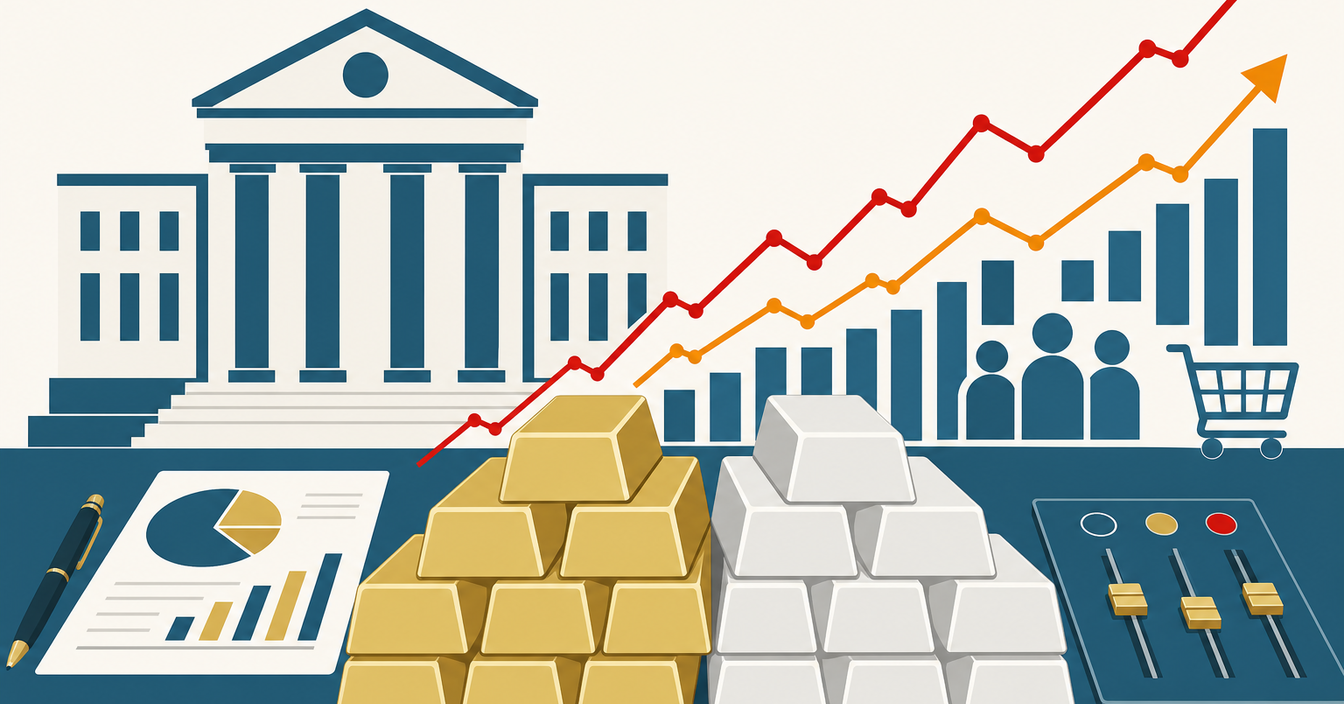
New BEA data showed May consumer inflation stayed elevated, with the PCE price index rising 0.4% on the month and 4.1% from a year earlier, alongside stronger gains in personal income and consumer outlays—figures that markets often use to reassess the interest-rate outlook that influences metals pricing.
U.S. inflation data closely watched by metals traders came in firm on Thursday. The Bureau of Economic Analysis reported that the Personal Consumption Expenditures (PCE) price index rose 0.4% in May, while the “core” measure excluding food and energy increased 0.3%. On a year-over-year basis, headline PCE inflation was 4.1% and core PCE inflation was 3.4%.
The same release also pointed to ongoing consumer momentum: personal income increased by $181.6 billion in May (0.7%), and personal consumption expenditures rose $156.1 billion (0.7%). Real (inflation-adjusted) consumer spending increased 0.3%.
For precious metals, PCE is a key macro input because it can alter expectations for how restrictive U.S. monetary policy may need to be. Shifts in rate expectations often flow through to Treasury yields and the U.S. dollar—two variables that can influence investment demand for gold and silver.
For industrial metals such as copper and aluminum, the combination of inflation pressures and spending trends may matter indirectly by shaping broader risk appetite and expectations for U.S. growth, though the market impact will depend on how investors interpret the data relative to prior readings and the Federal Reserve’s reaction function.
Why This News Matters
PCE inflation is the Federal Reserve’s preferred inflation gauge; surprises can quickly shift rate expectations, bond yields, and the U.S. dollar—key drivers for gold and silver, and an important macro input for industrial-metals demand sentiment.
Affected Metals
- GOLD: Hotter (or stickier) PCE inflation can influence Fed rate expectations, which may move real yields and the U.S. dollar—variables that often affect gold pricing.
- SILVER: Like gold, silver is sensitive to changes in U.S. rate expectations and the dollar; inflation data can shift both, even as silver also has industrial-demand crosscurrents