

A June slowdown in the ISM manufacturing index, alongside a notable step-down in the survey’s prices gauge, gave markets fresh information on growth and inflation momentum—inputs that can influence yields and the dollar and, in turn, gold and silver trading.
A key read on U.S. factory activity softened in June, offering metals traders a new datapoint on the balance between growth and inflation.
The Institute for Supply Management reported that its Manufacturing PMI eased to 53.3 in June from 54.0 in May, remaining in expansion territory but coming in below expectations. Beneath the headline, the report sketched a mixed picture: some demand-related measures continued to expand, while production momentum cooled.
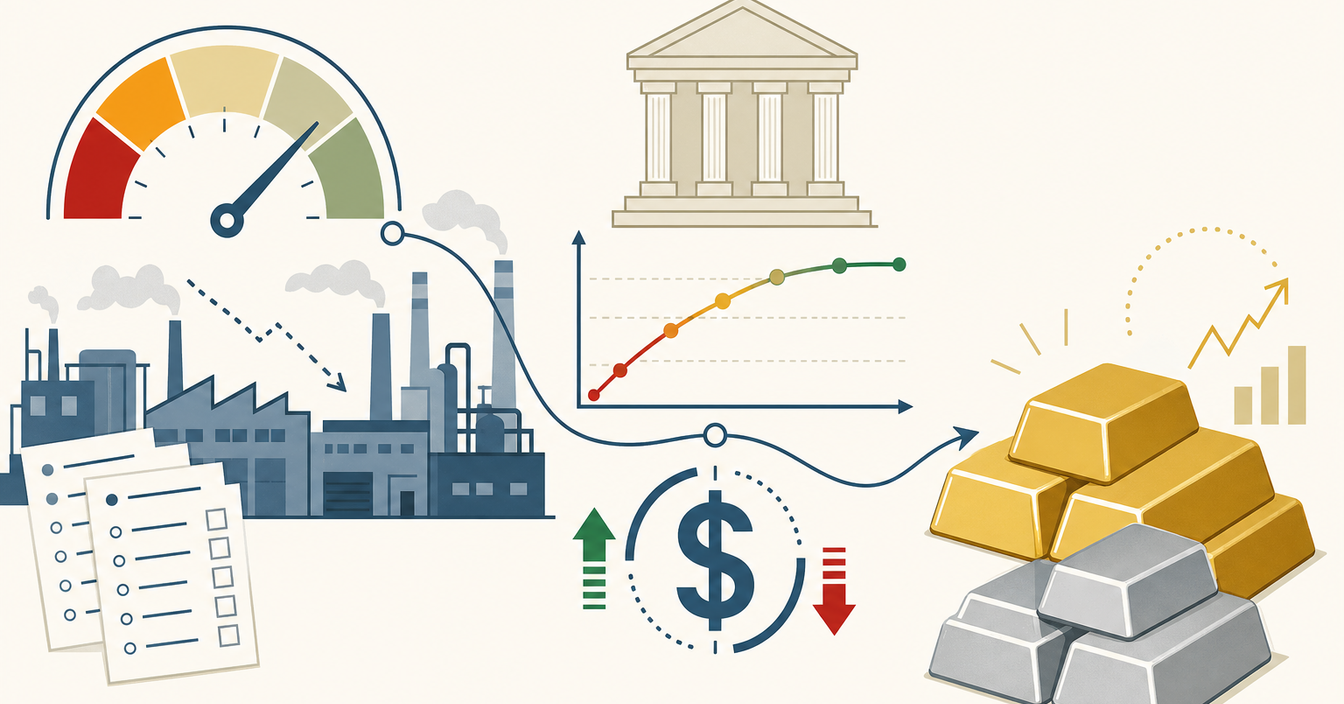
For precious-metals markets, one of the most closely watched details was the ISM Prices Index, which declined meaningfully from the prior month while still indicating higher input costs overall. Investors often monitor this component because changes in perceived inflation pressure can feed into interest-rate expectations.
That matters for gold and silver because shifts in rate pricing frequently ripple through Treasury yields and the U.S. dollar. Higher yields can raise the opportunity cost of holding non-yielding bullion, while a stronger dollar can make dollar-priced metals more expensive for non-U.S. buyers.
The market impact will depend on how participants weigh the signal from manufacturing and prices against upcoming labor-market data and the broader path of U.S. monetary policy.
Why This News Matters
ISM manufacturing data can shift expectations for U.S. growth and inflation, which may influence Treasury yields and the U.S. dollar—two major drivers of precious-metals pricing, especially gold and silver.
Affected Metals
- GOLD: The ISM PMI and especially the prices component can move interest-rate expectations, which may influence Treasury yields and the U.S. dollar—two key inputs for gold valuation.
- SILVER: Silver can react both to macro drivers (yields/dollar) and to changes in manufacturing sentiment that affect industrial-demand expectations.
Source: Kitco News