

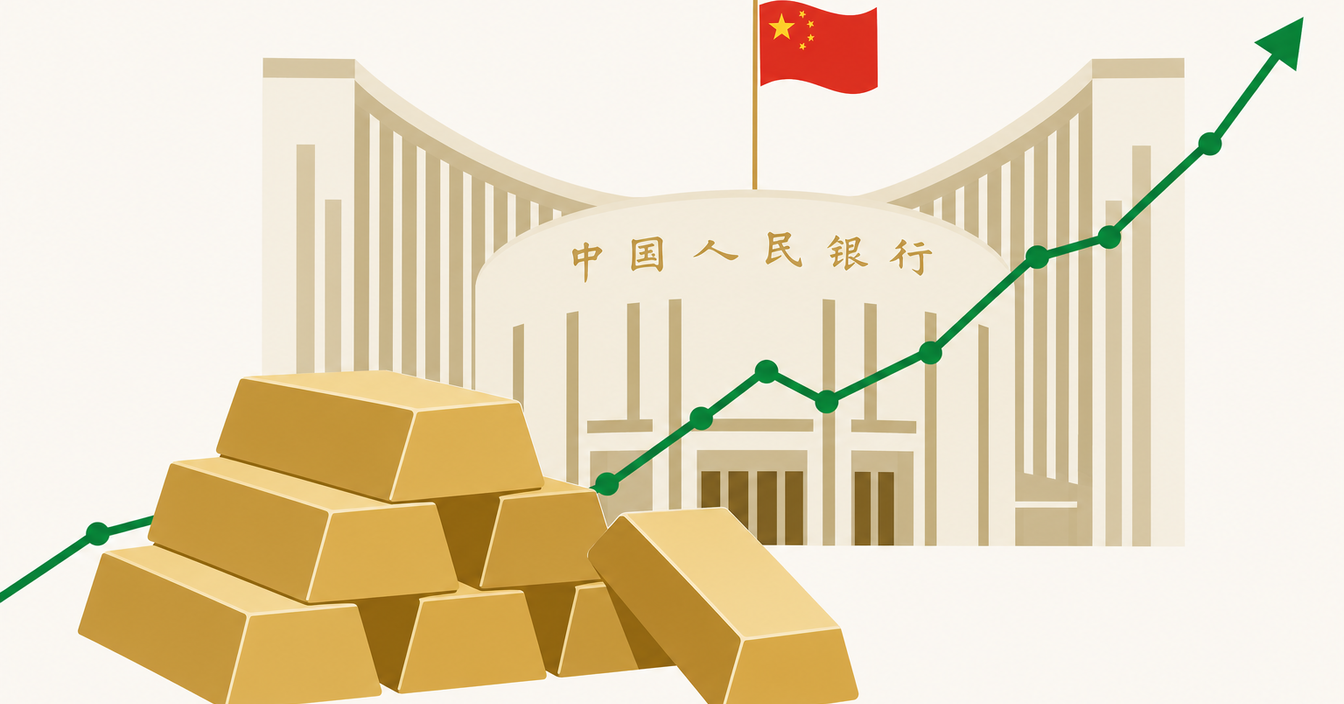
China’s central bank reported that its gold reserves rose again in April, extending a multi-month streak of additions. Markets often track official-sector buying as a demand signal that can matter for gold pricing and broader precious-metals sentiment.
China’s official gold holdings increased again in April, extending the central bank’s run of monthly additions and keeping official-sector demand in focus for bullion markets.
According to figures cited from the People’s Bank of China (PBOC), the country’s gold reserves rose to 74.64 million fine troy ounces at the end of April, up from 74.38 million ounces in March. The reported value of those holdings also edged higher to $344.17 billion from $342.76 billion.
For gold investors, central-bank reserve data can matter because it provides a concrete snapshot of ongoing official buying interest. Sustained accumulation by large reserve managers can be interpreted by market participants as supportive for long-term physical demand, even when short-term price action is dominated by U.S. interest-rate expectations, real yields, and the dollar.
The impact on prices is not automatic: broader macro conditions still tend to drive day-to-day moves. But the update reinforces that central-bank activity remains a key pillar many traders monitor when assessing the balance between investment flows and physical demand.
Silver can also be indirectly affected when gold demand signals shift overall precious-metals sentiment, although silver’s industrial-demand drivers can cause it to diverge at times.
Why This News Matters
Central-bank gold accumulation is closely watched because it can signal sustained official-sector demand for bullion, potentially influencing investor sentiment toward gold (and, by correlation, silver) alongside rates and currency drivers.
Affected Metals
- GOLD: Reported ongoing central-bank additions can be interpreted as continued official-sector demand, which may influence bullion sentiment and the perceived floor under longer-term physical demand.
- SILVER: Silver may react indirectly as gold-linked sentiment shifts across the precious-metals complex, though silver’s industrial factors can also dominate its pricing.
Source: Investing.com (Reuters)